| Website(s) | |
| Genres | Non-Fiction |
| Buy Now | Amazon.com Amazon.co.uk Bookshop.org Audiobook |
| Video Trailer | Watch Trailer |
Synopsis
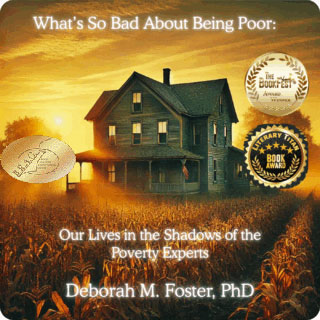
Deborah M. Foster’s What’s So Bad About Being Poor? is not a polite memoir—it’s a razor-edged confrontation with American myths about family, faith, and survival. While the title foregrounds poverty, the book bristles with taboo subjects that make it far more unsettling than a sociological case study. Foster documents the early onset of severe mental illness in her family, including suicide attempts and untreated psychosis, challenging the cultural script that poverty alone defines hardship. Chapters on narcissistic abuse, rape, child neglect, and intergenerational violence drag private traumas into public view, refusing to sanitize the raw mess of dysfunction. Religion, rather than a source of comfort, often appears as a breeding ground for hypocrisy and cult-like manipulation—her portraits of “The Prophet Onias” and “So Many Churches” depict a world where faith collides with exploitation and dogma.
The book is also unflinching about taboo psychological terrain: mood disorders labeled as “yo-yo moods,” a suicidal mother, and entire generations warped by personality disorders. Foster ties these lived realities to broader questions of genetics, resilience, and the ways institutions—from schools to churches to welfare offices—misunderstand or mishandle fragile lives. The result is a challenge to both conservative narratives that blame the poor and progressive ones that romanticize resilience. Foster is unsparing about her own missteps, weaving in stories of failed college adjustments, professional setbacks, and the loss of her career, making the memoir as much about identity and recovery as about material deprivation.
What makes the book controversial is not simply its catalog of suffering but its refusal to separate personal trauma from systemic critique. Poverty here is not the “main character”; it’s the backdrop against which questions of rape culture, religious authoritarianism, suicide, child protection failures, and the inheritance of mental illness play out. By pushing against the conventions of both memoir and policy writing, Foster indicts American society not just for neglecting the poor, but for perpetuating cycles of violence, stigma, and silence that cut across class lines. In doing so, she dares readers to confront uncomfortable truths about family loyalty, survival strategies, and the hidden costs of resilience.